Ani Ma’amin (“I Believe”)


“The Enlightenment and modernity have come under attack in the last few decades, and I see it as my mission to come to their defense,” says Pini Ifergan, professor of philosophy at Bar-Ilan University and co-director of the Spinoza Center at Van Leer Jerusalem Institute. “My view is that today principles like personal autonomy, freedom of thought, separation of religion and state and so on are more relevant than ever, and we should wish to uphold them.”
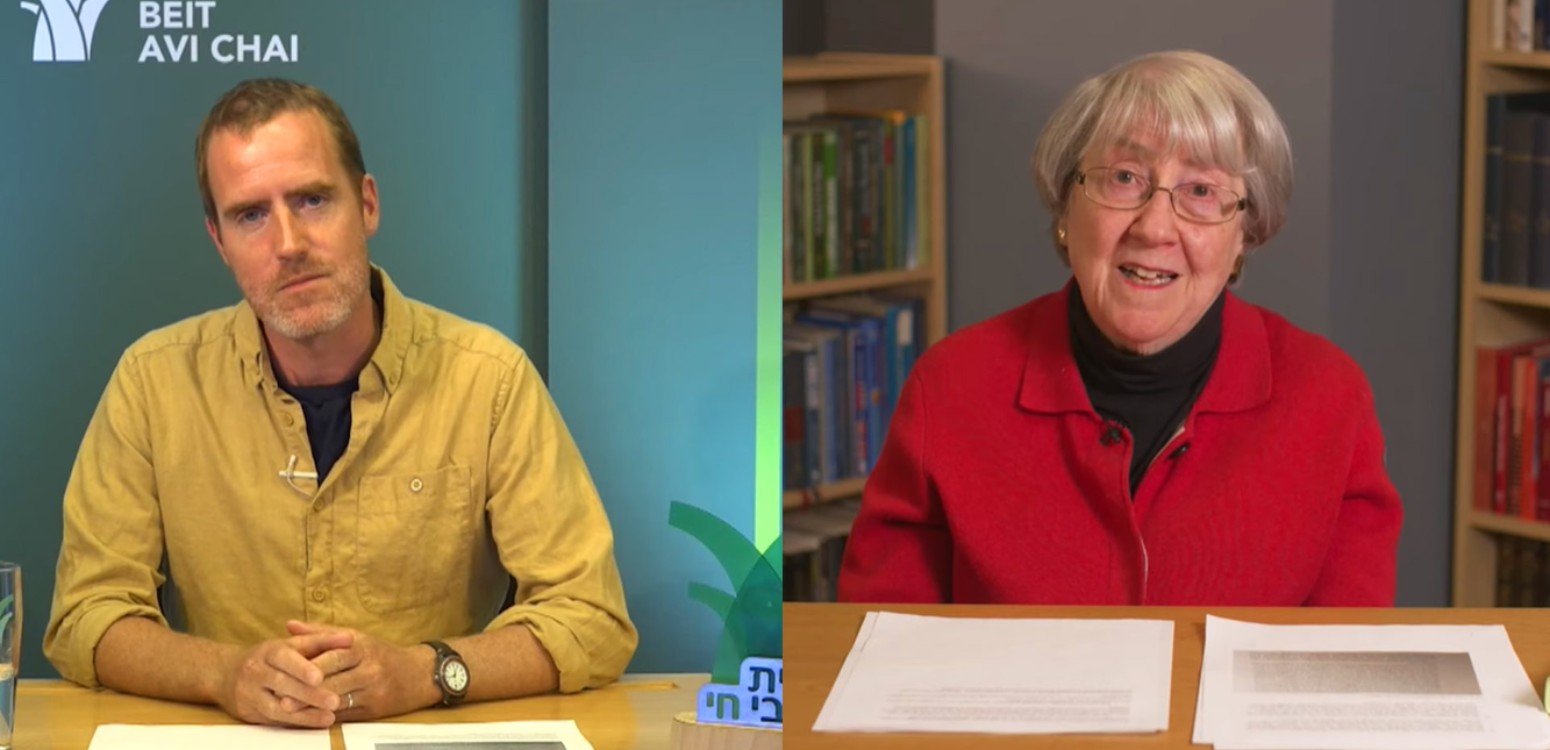
Prof. Ifergan is leading a series of lectures at Beit Avi Chai, dedicated to Baruch Spinoza’s pioneering “Theologico-Political Treatise”. This seminal work, published in 1670, laid the foundations for what would later become the standard system of governance in the West. “The treatise essentially seeks to reassess the relationship between the religious and the political,” says Ifergan. “Spinoza’s stance – which was radical even compared to many of his own followers – was that they should be entirely separate.”
Alongside John Locke (1632–1704), Thomas Hobbes (1588–1679), and others, Spinoza (1632–1677) was widely recognized as a harbinger of liberal democracy. But two things set him apart, says Prof. Ifergan.
Metaphysics and heresy
“The first was his complex metaphysics,” he says. “He was a firm believer in pantheism, meaning that God is everywhere. Contrary to conventional monotheistic wisdom, he rejected the separation between God and humans – which led him to be ostracized as a heretic.”
This metaphysical stance was the basis for the “Theologico-Political Treatise”: If God is everywhere, it’s up to humans to make sure that the religious and the political realms are separate. “Only once the religious and the political are mutually exclusive can freedom of thought and expression be guaranteed. You can say that God does not exist without fearing the consequences.”
A Jewish rationalist
Spinoza’s other unique feature was his Jewishness. Much of the book is an analysis of the Old Testament, in an effort to separate the political from the ecclesiastical. The Scriptures, Spinoza sought to establish, were not the work of God but of man.
“One of his central themes is prophecy,” says Prof. Ifergan. “When the Scripture says ‘and God spoke to Moses,’ the reader is led to believe that God literally communicated with Moses. But Spinoza says that it’s not that the prophets (Moses or any other) have a channel of communication with God; it’s just that they had unusual charisma, and could articulate ethical ideas better than others.”
“The same goes for miracles,” he continues. “Spinoza says outright that they are superstition. By doing that, he ‘humanizes’ the text – it’s no longer ordained from above, but rather a set of principles that one can choose whether to adopt or not. De-sanctifying the text is a first necessary step toward separating the theological from the political.”
Parts of Spinoza’s philosophy ran directly against basic principles of Judaism, Ifergan says. For example, he was taken by Paul’s universalism and questioned the principle of chosenness. And yet, Ifergan argues, this heretic can also be read as continuing a much older Jewish tradition: that of rationalism, of which Maimonides was the standard bearer. “Maimonidean rationalism cautioned against reading the Scriptures literally,” says Ifergan. “Equally, Spinoza could be seen as walking in the footsteps of the exegetical tradition of the Sages. But he turned it on its head by allowing a nonreligious engagement with the supposedly sacred text. In many ways he was the first secular Jew.”
How we understand Zionism
More than 350 years on, Prof. Ifergan is persuaded that Spinoza is more relevant than ever in XXI-century Israel. “Reading Spinoza brings up very fundamental questions about how we want public life to be shaped, how we understand Zionism – questions that we haven’t fully answered,” he says. “Early Zionist thinkers – David Ben-Gurion (1886–1973), A. D. Gordon (1856–1922) and others – were eminently Spinozian. Their secularist politics were very much attuned to the need to separate religion from the affairs of the state. We have since moved in the other direction, but we Israelis still need to ask ourselves what sort of role we want religion to play in public life, and Spinoza’s writings invite this kind of debate.” Nor does Prof. Ifergan conceal his own views: “I don’t mind it when people say Baruch Hashem, but when it becomes part of our public norms, it’s threatening.”
More broadly, Prof. Ifergan seeks to push back against recently fashionable notions about the failures of modernity and the end of Enlightenment. “We are not at all in a post-Enlightenment era,” he says. “We still live with the legacy of the Enlightenment, today more than ever. I firmly disagree with those who think that modernity failed because it didn't do away with religiosity. It wasn’t the goal of modernity in the first place. Spinoza says it loud and clear.”
Main Photo: Portrait of Benedictus de Spinoza (1632-1677)\ Wikipedia