Ani Ma’amin (“I Believe”)


Anthropologists and folklorists have long noted that virtually every culture develops a canon of supernatural threats – ghosts and goblins, demons and ghouls – and that these entities tend to relate to the same anxieties: death, sex, and immorality. Judaism is no different. For the rabbis of the Talmud and Midrash, the dark side of the supernatural was not a subject to be ignored. Angels get their due, but so does the shed (demon), Satan, and the wandering dead, whose stories are told on the same pages as the laws of Shabbat and the death of Moses.
This topic is covered in a lecture series at Beit Avi Chai by Dr. Chen Marx, who teaches at the Max Stern Yezreel Valley College. Marx is also the author of two Hebrew-language books that address this question from different angles: “Why Do Bad Things Happen to Good People?” (Yedioth Books, 2022), which examines the way Jewish culture has recounted the problem of retribution, and the recently published “The Dark Side of Beauty and Ugliness” (HaTachana, 2025), which asks how biblical and rabbinic texts process our attraction to what unsettles us.
Marx says that “the series connects the two books” and asks how these darker supernatural stories made it into the canon. “I don’t intend to provide a simple answer,” he says. “I want everyone who attends to find the answer that suits their personality and life experience.” The stories, he says, reward two parallel readings: the plain meaning of the text, and the deeper meaning that lies beneath it.
Four ways to read a demon
Marx frames the rabbis’ use of supernatural figures around four overlapping themes: cosmological, psychological, sociological, and educational. A cosmological story explains why the world looks the way it does – why there are Nephilim, why demons exist alongside angels. A psychological one externalizes an internal struggle, giving fear or desire a face and a name so that it can be confronted rather than just endured. A sociological story enforces communal norms by dramatizing what happens to those who transgress them, while an educational one teaches a specific halachic or ethical lesson through narrative rather than law. As Marx points out, a single story rarely serves only one of these functions: “The same tale can double as a piece of folk cosmology and a psychological lesson about temptation, which is one of the reasons these narratives have had such staying power.”
To understand the terminology involved, Marx explains, one must start with the Bible itself rather than the later rabbinic literature. The literary theorists Meir Sternberg and Menakhem Perry have argued that the Bible’s gaps and silences are rarely accidental, and that what a biblical narrative withholds is often as meaningful as what it discloses. The rabbis, Marx argues, read those same gaps and fill them in – giving shape to entities like shed, Satan, and ru’ach (spirit) that the Bible itself never defines precisely.
The sons of God and the shape they took
The series opens with Genesis 6, a brief passage in which the “sons of God” take human wives and produce a race of giants (Nephilim) before God resolves to shorten human life and, soon after, to flood the earth. The biblical text says almost nothing about who these “sons of God” are or why their union with humans is troubling, and Marx argues that this silence is what subsequently licenses centuries of retelling. Genesis Rabbah records a dispute over this passage. Rabbi Shimon bar Yochai reportedly cursed anyone who read the “sons of God” as semi-divine beings (Genesis Rabbah 26:5); other traditions insist they were simply rulers who abused their authority. Still other rabbinic voices preserved an older, supernatural reading involving fallen angels, as hinted in Yoma 67b.
Marx traces this same theme into the Book of Job, which he views as an early interpretation of the Genesis story: the “sons of God” appear there too, and God’s instruction to spare Job’s life echoes a moment in the Akedah, when Abraham is stopped from harming Isaac. Both scenes turn on the same Hebrew idiom, shalach yad (“to stretch forth a hand”) – the hinge point where violence against an innocent is either authorized or withheld.
Another recurring motif Marx notices is that dark forces repeatedly appear in female form. He doesn’t deny the misogyny in some of these texts, but resists reading the motif as only that. “The female body carried great symbolic meaning for the rabbis that included sexuality, fertility, and mystery. And it is not surprising that, from time to time, negative and positive meanings become attached to it.”
_-_WGA2572.jpg)
The next story turns to the lesser-known sage Matya ben Harash. In a story included in the Midrash Tanchuma, Satan appears to him disguised as a woman as beautiful as Naamah, the sister of Tubal-cain mentioned in Genesis 4:22 – the very figure the sages, and later commentators, claim seduced the “sons of God.” Marx argues that this shows Satan is capable of envy: his hostility toward Matya’s purity is itself a kind of confession that he has fallen short himself. And his disguise as a woman is no coincidence.
Without giving away how the sage responds to the confrontation, Marx treats the story as a test case for what a personal encounter with temptation looks like when it is narrated as a supernatural visitation rather than a psychological tale.
Two faces of Solomon
Probably the most famous story in the series is Solomon’s encounter with Ashmedai, king of the demons. The narrative, preserved in the Babylonian Talmud (Gittin 68a-b), begins with a construction challenge: the Temple had to be built without any iron tools touching its stones (1 Kings 6:7). To solve this, Solomon sets out to obtain the shamir, a miraculous creature capable of cutting rock without metal – a secret that only Ashmedai possesses. Marx is drawn to the story’s central tension: a wise human king squares off against the king of demons, and the encounter becomes a study in the limits of sovereignty. Solomon’s own biography – his wealth, his wives, his wisdom – is, for Marx, the reason such legends are associated with him. Without spoiling the story’s conclusion, it’s important to note that readers have long been fascinated by what happens once the demon is finally brought before the king.
Solomon also appears in the final story in the series, this time facing not the king of the demons but the Angel of Death itself. The tale, also found in the Babylonian Talmud (Sukkah 53a), involves two of Solomon’s scribes and the legendary city of Luz, where the Angel of Death is said to have no power. However, as Marx points out, the story’s real subject is “less about escaping death than about how one comes to terms with its inevitability.” Marx reads this story as fundamentally different in tone from the Ashmedai tale: here, Solomon does not attempt to master a dark force but instead learns something from an encounter with it. The story’s own afterlife is long: variations of it surface in Rumi’s XIII-century Persian poetry, before W. Somerset Maugham famously retold it in “Sheppey” (1933), from which it was adopted as the epigraph to John O’Hara’s 1934 novel “Appointment in Samarra”. For Marx, this is evidence that a fear “this specific and this universal will keep finding new tellers, regardless of language or century.”
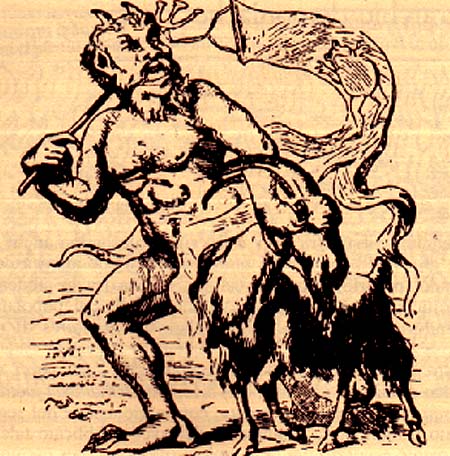
He doesn’t think the tension is really about death at all, though. “The stories are always built on tension,” he says, pointing to a recurring rabbinic theme in which the forbidden knowledge or encounter turns out to be a vehicle for confronting a more mundane, personal danger. He draws a comparison to psychology: patients who are asked to give fear a name, history, or story often find it becomes something they can manage rather than something that manages them. In this way, Solomon’s meeting with the Angel of Death is less about demons than about giving the fear of death a face separate from oneself. Marx points to Carl Jung’s “Answer to Job” as a modern parallel: for Jung, what matters in the Job story is not the outcome of the encounter between Job and God but the fact that the dialogue happens at all.
Asked what a modern, largely nonbelieving audience can take away from these stories beyond historical curiosity, Marx doesn’t hesitate: they are, first and foremost, “superb pieces of storytelling, crafted by writers who understood both narrative craft and the human psyche.” Whether or not one believes in demons, the question the series raises is simpler and more interesting than belief itself: Why do we need these stories at all? For Marx, the fact that we keep telling them is the answer.
Main Photo: Job's Sons and Daughters Overwhelmed by Satan, by William Blake.\ Wikipedia