OldContentID: 0
OldRefID: 0
Professor David G. Roskies argues that Sholem Aleichem’s fictional Kasrilevka mirrors modern Israel’s struggles – from the Dreyfus Affair paralleling the hostage crisis to exploring resilience amid existential threat. Sholem Aleichem’s tragicomic vision remains urgently relevant
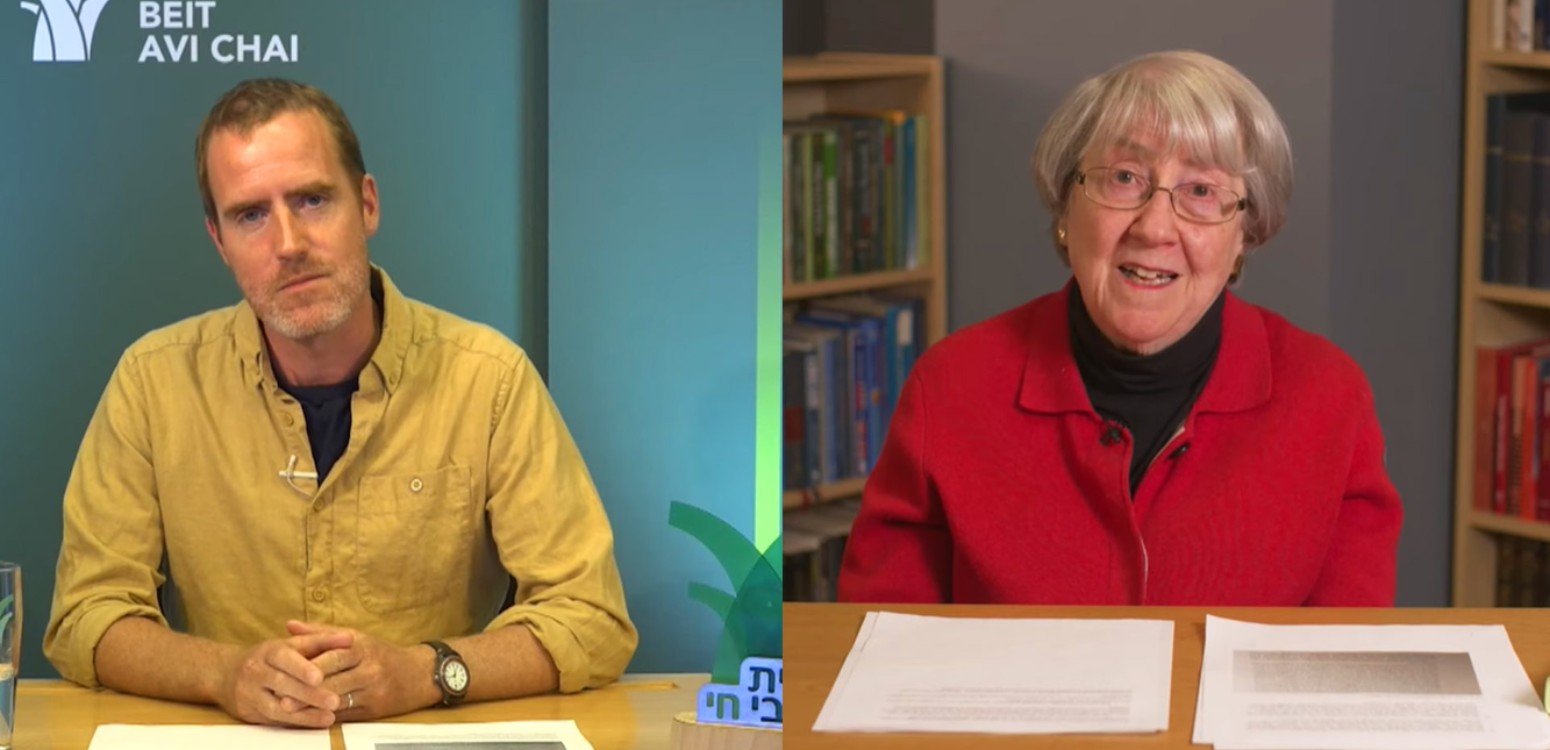
“I place Sholem Aleichem alongside Shakespeare, Cervantes, Gogol and Mark Twain, the greatest humorists in literary history,” says David G. Roskies, Professor Emeritus of Jewish Literature at the Jewish Theological Seminary in New York. Last month, Prof. Roskies led a lecture series at Beit Avi Chai, “Sholem Aleichem: The Making of a Comic Master”, dedicated to virtually the greatest Yiddish writer in history.
“In fact,” Roskies says emphatically, undeterred by the boldness of his claim, “Shakespeare is the closest analogy, for two reasons. First, just like Shakespeare, Sholem Aleichem is the greatest comedian and the greatest tragedian at the same time.” But also, just like Shakespeare almost single-handedly shaped modern English, “Sholem Aleichem discovered what Yiddish can do: the spokenness of it, the diversity, the zaniness, the pathos, the poetry. Sholem Aleichem heard it all.”
The Ashkenazi origin myth
Sholem Aleichem (1859-1916), with his rich portrayal of Jewish life in Eastern Europe at the turn of the XX century, was the author of the Ashkenazi origin myth. In what would later become a marker of Jewish humor, he suffused with comedic observations descriptions of the existential angst felt by many Jews of the time, as their communities were caught between the rivaling ideologies of Zionism and Bundism and population dwindled due to mass emigration. Sholem Aleichem took this mindset and turned it into a literary tool: “His humor is rooted in deep pessimism,” says Prof. Roskies.
Sholem Aleichem’s prolific period was at the very beginning of the XX century, and it wasn’t long. Born Salomon Rabinovich in 1859 to a middle-class, Russian-speaking family, it is then that the assimilated writer reinvents himself as a sympathetic chronicler of the declining shtetl and adopts his famously fitting nom de plume. Having started off as a critic of the shtetl, he ended up elevating it to a canonical status. “Most of what we Ashkenazi know about our origins comes from Sholem Aleichem,” says Roskies.
“It gives us a very clear idea of where we came from, but also why we left,” he adds. “Sholem Aleichem knows that all the odds are against the Jews, the world is burning underneath their feet, they are going to lose everything. There is nothing the Jewish people can do to counteract their fate, they just react to it. But it doesn’t mean that they have to despair.” Herein lies the timelessness of Sholem Aleichem’s shtetl: It inoculates the modern Jewish reader against disappointment and catastrophe. Sholem Aleichem’s strength lies in his ability to laugh off disaster, says Roskies. “He is not Jane Austen, who is also writing about a world that is changing, but gradually and pastorally. It’s a totally different understanding of change and people’s ability to handle it.”
Kasrilevka mon amour
Kasrilevka, the fictional shtetl that features in Sholem Aleichem’s stories, has become a pejorative reference in Hebrew, synonymous with lawless abandon and rule-bending politicking. However, for Roskies, it is a role model that Israel should seek to live up to, and in many ways it has succeeded in doing so. “Kasrilevka shows the reader how we build our identity, and learn to stand for ourselves,” he says. “It becomes a model of resilience and undaunted people.”
These parallels become apparent in one of the stories that recounts how the residents of Kasrilevka follow the news of the Dreyfus Affair, the trial of a Jewish French Army officer wrongfully convicted of treason. “News of the Dreyfus Affair is their only connection with the outside world, and it shapes their experience of being Jewish in the world – the sense of hopelessness and anticipation,” says Roskies. “This is exactly what Israelis felt the last two years, with the hostage crisis. Just like they waited for the hostages to return home, the people of Kasrilevka waited for Dreyfus to return from Devil’s Island.”
Capturing the collective
Sholem Aleichem’s genius, Prof. Roskies adds, was his ability to capture the collective, and to inquire into its meanings. Whether in Kasrilevka or the State of Israel, the underlying issues remain the same. “He was a Zionist and was deeply concerned about the forces of dissolution from within and the forces of dissolution from without,” Prof. Roskies says. “In many ways, he writes for an Israeli reader that has to grapple with this every day anew. Kasrilevka becomes a laboratory which he will expand for about a dozen years, for all these forces from within: like pogroms, apostasy, class conflict, loss of faith, all the things that happened within a real living society. In the end, Kasrilevka will be abandoned because people are leaving, and Sholem Aleichem will relocate it to the Lower East Side.”
The deep structure of being a Jew in the world, Roskies insists, hasn’t changed that much since then. “Life for a Jew is an impossible mixture of the tragic and the comic,” he says. Just like Sholem Aleichem had described it.
For more, see Prof. David G. Roskies’s, “Sholem Aleichem: The Making of a Comic Master.”
Main Photo: Sholem Aleichem\ Wikipedia
Model.Data.ShopItem : 0
8